Finding the best turf for sandy soil on the Central Coast is less about looks and more about understanding how coastal conditions affect lawn performance over time.
Sandy soils drain quickly, struggle to retain nutrients, and can dry out fast during warmer months. Add salt-laden air and variable rainfall into the mix, and many lawn varieties simply fail to establish properly.
Kikuyu turf has become a popular choice across the region because it works with these conditions rather than fighting them. When grown locally and installed correctly, it delivers strong coverage, fast recovery, and dependable performance in sandy coastal environments, particularly when sourced through experienced suppliers such as Peats Ridge Turf Supplies.
What makes sandy soil challenging for turf?
Sandy soils are common across the Central Coast, especially in coastal and near-coastal suburbs. While they are easy to work with, they present several challenges for lawns.
Key characteristics of sandy soil include:
- Rapid drainage that limits moisture retention
- Lower nutrient-holding capacity than heavier soils
- Increased exposure to heat stress during summer
Turf that cannot establish strong roots or recover quickly will often thin out, leading to patchiness and higher water use. This is why turf selection is critical when choosing the best turf for sandy soil on the Central Coast.
What is Kikuyu turf?
Kikuyu is a fast-growing, warm-season grass known for its aggressive growth habit and resilience. It spreads through runners, allowing it to repair damaged areas quickly and maintain coverage even under stress.
Kikuyu turf is commonly used for:
- Residential lawns with high foot traffic
- Coastal properties exposed to wind and salt air
- Large areas where durability matters more than a fine finish
Locally grown Kikuyu turf, such as Kikuyu supplied for Central Coast conditions, is particularly effective because it is already adapted to regional soils and climate patterns.
Why Kikuyu thrives in sandy, coastal soils
Kikuyu performs well in sandy environments because its growth habits align with the limitations of the soil rather than competing against them.
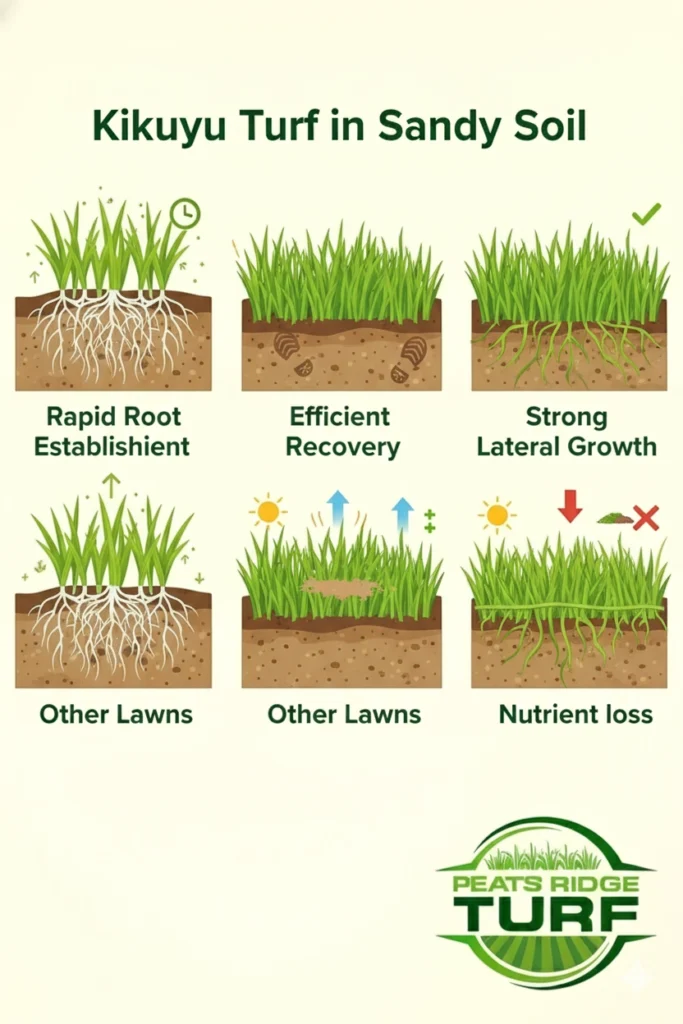
Rapid root establishment
Kikuyu establishes quickly, allowing it to anchor into sandy soil before moisture drains away. This early root development helps stabilise the surface and reduce erosion.
Efficient recovery after stress
In coastal areas, lawns are often exposed to heat, foot traffic, and dry spells. Kikuyu recovers faster than many turf varieties, reducing bare patches that would otherwise increase water loss.
Strong lateral growth
Kikuyu spreads horizontally, filling gaps and maintaining coverage. This limits exposed soil, which in turn helps reduce evaporation and nutrient loss.
These traits explain why Kikuyu is often recommended as the best turf for sandy soil Central Coast properties with practical performance requirements.
Coastal conditions and salt tolerance
Coastal lawns face additional challenges beyond soil type. Salt spray, wind exposure, and intense sunlight can all stress turf varieties not suited to the environment.
Kikuyu shows good tolerance to these conditions, particularly when compared to finer turf types that struggle to recover from salt exposure. While no turf is immune to coastal stress, Kikuyu’s resilience makes it a reliable option for properties close to the ocean.
Appearance versus practicality
Kikuyu is not chosen for a manicured, ornamental finish. It is chosen because it works.
From a practical standpoint, Kikuyu offers:
- Dense coverage that protects sandy soil from erosion
- A robust surface suited to active households
- Lower risk of long-term patchiness
For many Central Coast properties, these benefits outweigh the need for a softer or finer leaf texture.
How Kikuyu compares to other turf types in sandy soil
Choosing the best turf for sandy soil on the Central Coast often comes down to performance rather than preference.
The table below highlights how Kikuyu compares to less robust turf varieties in sandy environments.
| Feature | Kikuyu Turf | Less suitable turf types |
| Establishment speed | Fast | Moderate to slow |
| Recovery from wear | Strong | Limited |
| Suitability for sandy soil | High | Variable |
| Maintenance tolerance | Forgiving | Sensitive |
| Long-term coverage | Consistent | Patch-prone |
This comparison helps explain why Kikuyu is frequently selected for coastal and sandy soil applications.
Why turf quality and preparation still matter
Even the most suitable turf can struggle if quality and preparation are overlooked.
Poor-quality turf often establishes unevenly and requires more water to recover. Sourcing turf from experienced growers improves consistency, root development, and long-term resilience.
Accurate measurement is another critical step. Ordering too little turf leads to patching and extended establishment watering, which is particularly problematic in sandy soils. Using a lawn measurement guide before ordering helps ensure complete coverage from the outset.
Installation practices that support success in sandy soils
Sandy soils benefit from thoughtful installation practices that encourage root depth and moisture retention.
Best practice includes:
- Preparing the soil with appropriate organic matter to improve structure
- Laying turf promptly to prevent root drying
- Watering deeply during establishment, then reducing frequency gradually
These steps allow Kikuyu to establish strong roots and deliver consistent coverage with fewer long-term issues.
Suitability across Central Coast property types
Kikuyu turf is commonly used across a range of Central Coast properties, including:
- Family homes with active outdoor use
- Larger blocks where durability matters
- Coastal properties exposed to wind and salt
- Areas where low-maintenance is preferred
For those wanting insight into the experience behind their turf supplier, learning more about the background of Peats Ridge Turf Supplies helps explain how locally grown turf contributes to better outcomes in challenging soil conditions.
Choosing the right turf with confidence
Selecting the best turf for sandy soil in Central Coast properties requires balancing soil conditions, climate exposure, and how the lawn will be used.
Kikuyu delivers dependable performance in sandy, coastal soils when quality turf is combined with proper preparation and realistic maintenance practices.
For tailored advice based on your site conditions, speaking directly with the team to ensures recommendations are practical rather than generic.