
MEasure Grass
Measure the area of your planned lawn (excluding paths, gardens, pool etc)
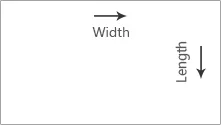
Square
Measure in metres the LENGTH and WIDTH of the square or rectangular area. To calculate the required amount of Turf in square metres, multiply the length by the width.
Example: Length 5 metres & Width 6 metres 5 x 6 = 30 square metres.
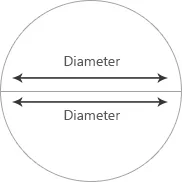
Cricle
Measure in metres the DIAMETER of the Circular area. To calculate the required amount of Turf in square metres. Multiply the diameter by 0.8 and then multiply by the diameter again.
Example: Diameter 5 metres : 0.8 x 5x 5 = 20 square metres
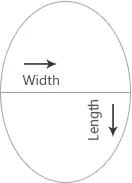
Oval
Measure in metres the LENGTH and WIDTH of the oval area. To calculate the required amount of Turf in square metres multiply 0.8 by the length and then multiply by the width.
Example: Length 20 metres Width 16 metres: 0.8 x 20 x 16 = 256 square metres
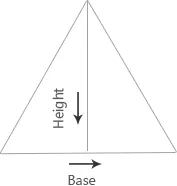
Triangle
Measure in metres the BASE and HEIGHT of the Triangular area. To calculate the required amount of turf in square metres, multiply half the base and then multiply by the height.
Example: Base 30 metres & height 15 metres: (1/2 x 30) x 15 = 225 square metres
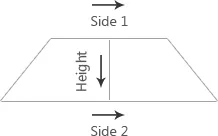
Trapezoid
Measure in metres PARALLEL SIDES (I) and (2) and HEIGHT perpendicular to the Parallel Sides. To calculate the required amount of Turf in square metres, add the two parallel sides together and multiply by 1/2. Then multiply by the height.
Example: Parallel side (1) 20 metres: parallel side (2) 30 metres: height 10 metres
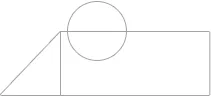
Unusual Shapes
Measure metres by firstly dividing the area into sections of regular shapes ie circle, square and triangle to calculate the required amount of Turf in square metres. Apply the formulas above for each shape.
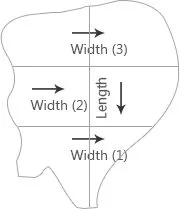
Different Widths
Measure metres by firstly measuring the length of the longest axis across the area. Every two metres along the length line measure the width of the area at right angles to the length line. Total all these widths, divide by the number of width section and multiply by the length.
Example: Length 8 metres: width (1) 2 metres: width (2) 3 metres: width (3) 5 metres.