Turf installation isn’t just about rolling out grass. For builders and landscape designers, it’s the finishing touch that can either elevate a project or reveal its flaws. Poor turf selection or rushed installation creates long-term headaches for clients, while thoughtful planning ensures a polished, thriving outdoor space.
If you’re involved in landscape projects, understanding turf from the ground up can save time, avoid costly errors, and enhance your project’s value. Here’s what you need to know.
What is Turf Installation in Landscape Construction?
Turf installation is the process of laying rolls of pre-grown grass on prepared soil. It creates an instant lawn with minimal wait time. For large residential builds, commercial sites or outdoor renovations, it’s a practical and visually impressive solution.
Turf can be installed at nearly any time of year and is often the final stage in landscape work, providing a clean, finished look.
Peats Ridge Turf Supplies offers a range of locally grown turf, ideal for Central Coast landscapes and varied project types.
Why Turf Quality is Non-Negotiable
Not all turf is created equal. If you want satisfied clients, repeat work and a thriving lawn post-handover, start with quality turf.
What defines high-quality turf?
- Grown in local conditions to ensure resilience and adaptability
- Cut fresh to order, so it roots quickly after installation
- Free of pests, weeds and disease
- Suitable for the end use (shade, traffic, drought, etc.)
Two reliable options for Central Coast projects include:
- Sir Walter Buffalo – Known for soft leaves, shade tolerance and low maintenance, it’s a great choice for family-friendly lawns and shaded gardens.
- Kikuyu Grass – A fast-growing, sun-loving variety ideal for large open areas and high foot traffic zones.
Matching turf type with site conditions ensures longevity, aesthetic consistency and fewer problems post-install.
How to Prepare a Site Before Turf is Laid
A well-prepared site is key to turf success. Laying grass on poor soil or uneven ground guarantees poor results.
Here’s a checklist to guide your preparation:
- Remove existing vegetation and debris
Clear all weeds, stones and roots. Use a non-residual herbicide if necessary. - Roughly grade the area
Use landscaping equipment to even out slopes and create a gentle grade away from buildings to assist drainage. - Add a level turf underlay
Spread 100 mm of quality turf underlay or sandy loam soil and level using a lawn leveller or rake. - Check soil pH and improve as needed
Aim for a pH between 6.0 and 7.0. Add gypsum to improve clay soils or compost for sandy soil. - Compact lightly and the final level
Light compaction with a roller ensures stability. A level finish prevents pooling or dry patches. - Use a turf calculator to measure area accurately
Avoid waste and delays. Use our free turf measuring tool to order the right amount.
Accurate prep means better root contact, fewer gaps and quicker establishment.
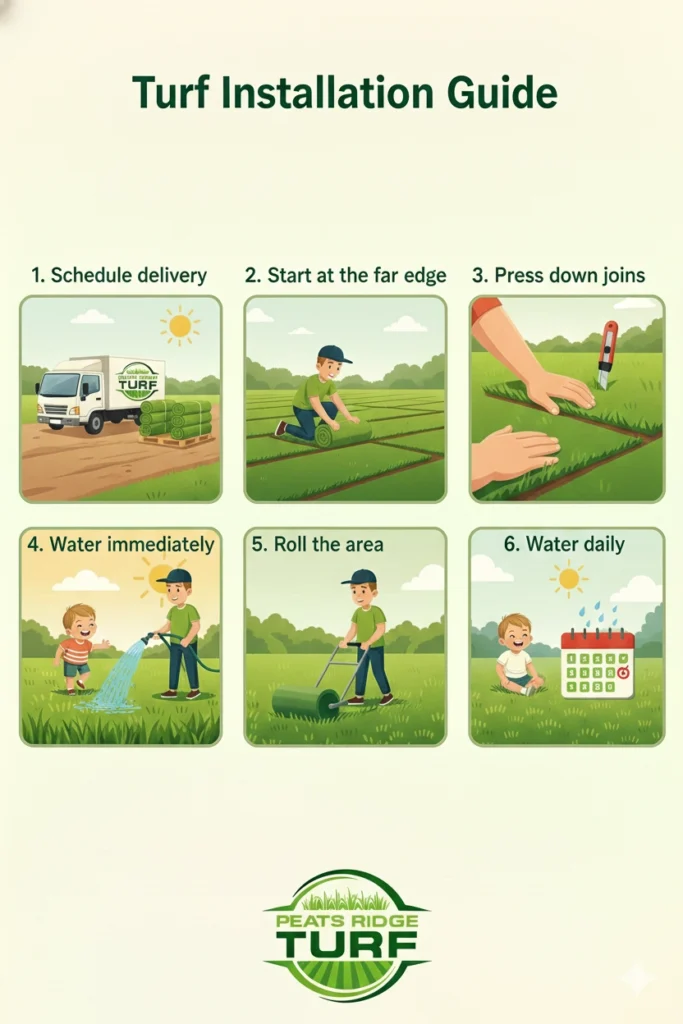
Step-by-Step Turf Installation Guide for Professionals
Laying turf is simple, but precision matters if you want results that look sharp and last.
1. Schedule delivery for installation day
Turf is perishable. Order from a local grower like Peats Ridge Turf Supplies so it arrives fresh and ready.
2. Start at the far edge of the area
Work in a straight line and stagger the joints brick-style. This prevents visible seams and improves overall strength.
3. Press down joins firmly
Eliminate gaps between rolls. If needed, trim edges with a sharp knife for a tight fit.
4. Water immediately after laying
Soak the turf as soon as each section is down. Consistent moisture in the first week helps roots bond with the soil.
5. Roll the area
Lightly roll to ensure soil contact and remove air pockets.
6. Water daily for 7–10 days
Keep the turf damp but not soggy. After establishment, reduce to deep watering a few times per week, depending onthe weather.
If you prefer to outsource this stage, professional turf installation services are available to ensure a hassle-free, high-quality finish.
Key Factors That Impact Turf Selection for Landscape Projects
Choosing turf isn’t just about aesthetics. Builders and designers need to factor in several practical considerations before making a recommendation.
Sunlight
- Full sun? Kikuyu thrives.
- Shaded or partially shaded areas? Sir Walter Buffalo performs better.
Foot traffic
- High-use areas like playgrounds or paths benefit from fast-repairing varieties.
Watering capacity
- Drought-tolerant options help meet sustainability goals or client preferences.
Soil type
- Assess nutrient levels and structure. Add turf underlay to level the playing field if the existing soil is poor.
Maintenance expectations
- Some clients want low-mow lawns. Others are happy to put in more effort. Match the turf accordingly.
For a breakdown of available varieties and their best uses, see the full turf range here.
When to Install Turf: Seasonal Considerations
Turf can be laid year-round on the Central Coast, but some periods offer better results with less maintenance.
Best Seasons
- Spring and autumn provide mild temperatures and active growth
- Early spring installs establish quickly and benefit from summer sun
Installing in summer
- Can be done successfully if watering is consistent
- Avoid long delays between delivery and installation
Installing in winter
- Possible with hardy varieties like Sir Walter
- Slower root establishment but reduced watering demand
Planning around the seasons reduces stress on the turf and cuts down on water usage in early stages.
Turf Aftercare: Setting Clients Up for Success
Educating your clients on turf maintenance adds value to your service and reduces complaints down the track.
Here’s a simple care plan you can pass on:
- Watering
Daily for the first 7–10 days. Gradually reduce as roots establish. - Mowing
Wait until the grass is at least 6 cm high. Cut only the top third of the leaf. - Fertilising
Use a starter fertiliser during installation. Follow up every 8 weeks with a slow-release blend. - Foot traffic
Keep off the new turf for at least 2 weeks to allow rooting. - Ongoing care
Annual aeration and seasonal weed control will keep the lawn healthy long-term.
Maintenance is simpler when the turf is well-suited to the site and was installed correctly from day one. To get personalised recommendations, feel free to contact our expert team.
Final Thoughts: Quality Turf Brings Projects to Life
When turf is selected and installed correctly, it transforms your project from “nearly done” to “absolutely stunning”. It adds softness, colour, and a sense of completion that clients instantly notice.
Peats Ridge Turf Supplies partners with builders and landscape professionals to deliver high-quality, locally grown turf for projects of all sizes. With more than 20 years of experience, we help you make the right call on turf varieties, quantities and installation timing — so your projects finish strong.Need advice or want to book a delivery? Get in touch with our team today.